Tuesday, January 30, 2007

A First Confession (William Butler Yeats)


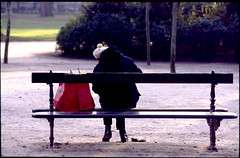
Vinterkyss
Originally uploaded by AN Kim.


I admit the briar
Entangled in my hair
Did not injure me;
My blenching and trembling,
Nothing but dissembling,
Nothing but coquetry.

I long for truth, and yet
I cannot stay from that
My better self disowns,
For a man's attention
Brings such satisfaction
To the craving in my bones.

Brightness that I pull back
From the Zodiac,
Why those questioning eyes
That are fixed upon me?
What can they do but shun me
If empty night replies?

William Butler Yeats

William Butler Yeats

Biography

William Butler Yeats

William Butler Yeats (1865-1939) was born in Dublin. His father was a lawyer and a well-known portrait painter. Yeats was educated in London and in Dublin, but he spent his summers in the west of Ireland in the family's summer house at Connaught. The young Yeats was very much part of the fin de siècle in London; at the same time he was active in societies that attempted an Irish literary revival. His first volume of verse appeared in 1887, but in his earlier period his dramatic production outweighed his poetry both in bulk and in import. Together with Lady Gregory he founded the Irish Theatre, which was to become the Abbey Theatre, and served as its chief playwright until the movement was joined by John Synge. His plays usually treat Irish legends; they also reflect his fascination with mysticism and spiritualism. The Countess Cathleen (1892), The Land of Heart's Desire (1894), Cathleen ni Houlihan (1902), The King's Threshold (1904), and Deirdre (1907) are among the best known.

After 1910, Yeats's dramatic art took a sharp turn toward a highly poetical, static, and esoteric style. His later plays were written for small audiences; they experiment with masks, dance, and music, and were profoundly influenced by the Japanese Noh plays. Although a convinced patriot, Yeats deplored the hatred and the bigotry of the Nationalist movement, and his poetry is full of moving protests against it. He was appointed to the Irish Senate in 1922. Yeats is one of the few writers whose greatest works were written after the award of the Nobel Prize. Whereas he received the Prize chiefly for his dramatic works, his significance today rests on his lyric achievement. His poetry, especially the volumes The Wild Swans at Coole (1919), Michael Robartes and the Dancer (1921), The Tower (1928), The Winding Stair and Other Poems (1933), and Last Poems and Plays (1940), made him one of the outstanding and most influential twentieth-century poets writing in English. His recurrent themes are the contrast of art and life, masks, cyclical theories of life (the symbol of the winding stairs), and the ideal of beauty and ceremony contrasting with the hubbub of modern life.

From Nobel Lectures, Literature 1901-1967, Editor Horst Frenz, Elsevier Publishing Company, Amsterdam, 1969

This autobiography/biography was first published in the book series Les Prix Nobel. It was later edited and republished in Nobel Lectures. To cite this document, always state the source as shown above.

William Butler Yeats died on January 28, 1939.

Copyright © The Nobel Foundation 1923

A Cradle Song


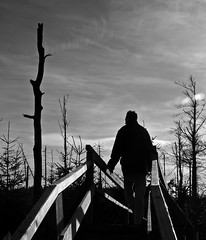
lotharpfad
Originally uploaded by heavenuphere.


THE angels are stooping
Above your bed;
They weary of trooping
With the whimpering dead.
God's laughing in Heaven
To see you so good;
The Sailing Seven
Are gay with His mood.
I sigh that kiss you,
For I must own
That I shall miss you
When you have grown.

William Butler Yeats

Alba (Ezra Pound)


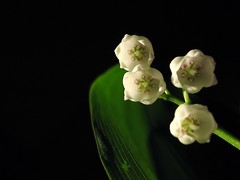
Lily of the valley, Pt. 2
Originally uploaded by Don Gru.


As cool as the pale wet leaves
of lily-of-the-valley
She laid beside me in the dawn

Ezra Pound

A Girl (Ezra Pound )


memories
Originally uploaded by fabikinhas_world.


The tree has entered my hands,
The sap has ascended my arms,
The tree has grown in my breast -
Downward,
The branches grow out of me, like arms.

Tree you are,
Moss you are,
You are violets with wind above them.
A child - so high - you are,
And all this is folly to the world.

Ezra Pound

all in green (ee cummings)


Originally uploaded by maz hewitt.

all in green


All in green went my love riding
on a great horse of gold
into the silver dawn.

Four lean hounds crouched low and smiling
the merry deer ran before.

Fleeter be they than dappled dreams
the swift red deer
the red rare deer.

Four red roebuck at a white water
the cruel bugle sang before.

Horn at hip went my love riding
riding the echo down
into the silver dawn.

Four lean hounds crouched low and smiling
the level meadows ran before.

Softer be they than slippered sleep
the lean lithe deer
the fleet flown deer.

Four fleet does at a gold valley
the famished arrow sang before.

Bow at belt went my love riding
riding the mountain down
into the silver dawn.

Four lean hounds crouched low and smiling
the sheer peaks ran before.

Paler be they than daunting death
the sleek slim deer
the tall tense deer.

Four tall stags at the green mountain
the lucky hunter sang before.

All in green went my love riding
on a great horse of gold
into the silver dawn.

Four lean hounds crouched low and smiling
my heart fell dead before.

ee cummings

An Appearance (Sylvia Plath)


IMAG0023
Originally uploaded by MIU!.


The smile of iceboxes annihilates me.
Such blue currents in the veins of my loved one!
I hear her great heart purr.

From her lips ampersands and percent signs
Exit like kisses.
It is Monday in her mind: morals

Launder and present themselves.
What am I to make of these contradictions?
I wear white cuffs, I bow.

Is this love then, this red material
Issuing from the steele needle that flies so blindingly?
It will make little dresses and coats,

It will cover a dynasty.
How her body opens and shuts --
A Swiss watch, jeweled in the hinges!

O heart, such disorganization!
The stars are flashing like terrible numerals.
ABC, her eyelids say.

Sylvia Plath

A Song (Walt Whitman)


In his footsteps...
Originally uploaded by specialagentkate.


COME, I will make the continent indissoluble;
I will make the most splendid race the sun ever yet shone upon;
I will make divine magnetic lands,
With the love of comrades,
With the life-long love of comrades.


I will plant companionship thick as trees along all the rivers of
America, and along the shores of the great lakes, and all over
the prairies;
I will make inseparable cities, with their arms about each other's
necks;
By the love of comrades,
By the manly love of comrades.


For you these, from me, O Democracy, to serve you, ma femme! 10
For you! for you, I am trilling these songs,
In the love of comrades,
In the high-towering love of comrades.

Walt Whitman

After Years (Ted Kooser)


Originally uploaded by fabikinhas_world.

After Years

Today, from a distance, I saw you
walking away, and without a sound
the glittering face of a glacier
slid into the sea. An ancient oak
fell in the Cumberlands, holding only
a handful of leaves, and an old woman
scattering corn to her chickens looked up
for an instant. At the other side
of the galaxy, a star thirty-five times
the size of our own sun exploded
and vanished, leaving a small green spot
on the astronomer's retina
as he stood on the great open dome
of my heart with no one to tell.

Ted Kooser

A Birthday Poem (Ted Kooser)


a familiar view
Originally uploaded by maxivida.


Just past dawn, the sun stands
with its heavy red head
in a black stanchion of trees,
waiting for someone to come
with his bucket
for the foamy white light,
and then a long day in the pasture.
I too spend my days grazing,
feasting on every green moment
till darkness calls,
and with the others
I walk away into the night,
swinging the little tin bell
of my name.

Ted Kooser

LES PASSANTES

Je veux dédier ce poème
A toutes les femmes qu'on aime
Pendant quelques instants secrets
A celles qu'on connait à peine
Qu'un destin différent entraîne
Et qu'on ne retrouve jamais

A celle qu'on voit apparaître
Une seconde à sa fenêtre
Et qui, preste, s'évanouit
Mais dont la svelte silhouette
Est si gracieuse et fluette
Qu'on en demeure épanoui

A la compagne de voyage
Dont les yeux, charmant paysage
Font paraître court le chemin
Qu'on est seul, peut-être, à comprendre
Et qu'on laisse pourtant descendre
Sans avoir effleuré sa main

A la fine et souple valseuse
Qui vous sembla triste et nerveuse
Par une nuit de carnaval
Qui voulu rester inconnue
Et qui n'est jamais revenue
Tournoyer dans un autre bal

A celles qui sont déjà prises
Et qui, vivant des heures grises
Près d'un être trop différent
Vous ont, inutile folie,
Laissé voir la mélancolie
D'un avenir désespérant

Chères images aperçues
Espérances d'un jour déçues
Vous serez dans l'oubli demain
Pour peu que le bonheur survienne
Il est rare qu'on se souvienne
Des épisodes du chemin

Mais si l'on a manqué sa vie
On songe avec un peu d'envie
A tous ces bonheurs entrevus
Aux baisers qu'on n'osa pas prendre
Aux cœurs qui doivent vous attendre
Aux yeux qu'on n'a jamais revus

Alors, aux soirs de lassitude
Tout en peuplant sa solitude
Des fantômes du souvenir
On pleure les lêvres absentes
De toutes ces belles passantes
Que l'on n'a pas su retenir

Antoine Pol

Famous song sung by Georges Brassens.


At Jardin de Luxenbourg
Originally uploaded by hefestus.

Monday, January 29, 2007

Do Not Go Gentle Into That Good Night (Dylan Thomas)

Do not go gentle into that good night,
Old age should burn and rave at close of day;
Rage, rage against the dying of the light.

Though wise men at their end know dark is right,
Because their words had forked no lightning they
Do not go gentle into that good night.

Good men, the last wave by, crying how bright
Their frail deeds might have danced in a green bay,
Rage, rage against the dying of the light.

Wild men who caught and sang the sun in flight,
And learn, too late, they grieved it on its way,
Do not go gentle into that good night.

Grave men, near death, who see with blinding sight
Blind eyes could blaze like meteors and be gay,
Rage, rage against the dying of the light.

And you, my father, there on that sad height,
Curse, bless, me now with your fierce tears, I pray.
Do not go gentle into that good night.
Rage, rage against the dying of the light.

Dylan Thomas


Originally uploaded by maz hewitt.

Clown in the Moon (Dylan Thomas)

My tears are like the quiet drift
Of petals from some magic rose;
And all my grief flows from the rift
Of unremembered skies and snows.

I think, that if I touched the earth,
It would crumble;
It is so sad and beautiful,
So tremulously like a dream.

Dylan Thomas


Originally uploaded by Emelobi.

Flying at Night (Ted Kooser)

Flying at Night

Above us, stars. Beneath us, constellations.
Five billion miles away, a galaxy dies
like a snowflake falling on water. Below us,
some farmer, feeling the chill of that distant death,
snaps on his yard light, drawing his sheds and barn
back into the little system of his care.
All night, the cities, like shimmering novas,
tug with bright streets at lonely lights like his.

Ted Kooser


memento mori 2
Originally uploaded by TommyOshima.

Ted Kooser Bio

Ted Kooser is one of Nebraska’s most highly regarded poets and served as the United States Poet Laureate Consultant in Poetry to the Library of Congress from 2004 - 2006. A professor of English at the University of Nebraska-Lincoln, he is the author of eleven full-length collections of poetry, including Delights and Shadows (Copper Canyon Press, 2004) and Weather Central (University of Pittsburgh Press, 1994). Over the years his works have appeared in many periodicals including The Atlantic Monthly, The New Yorker, Poetry, The Hudson Review, The Nation, The American Poetry Review, The Kenyon Review, Prairie Schooner, and Antioch Review. Koosers’ poems are included in textbooks and anthologies used in both secondary schools and college classrooms across the country. He has received two NEA fellowships in poetry, the Pushcart Prize, the Stanley Kunitz Prize, The James Boatwright Prize, and a Merit Award from the Nebraska Arts Council.

Kooser has read his poetry for The Academy of American Poets in New York City as well as for many university audiences including those of the University of California at Berkeley, Cornell at Ithaca, Case Western Reserve at Cleveland, The School of the Art Institute in Chicago, and Wesleyan University in Connecticut. He has conducted writing workshops in connection with many of these readings.

In addition to poetry, Kooser has written in a variety of forms including plays, fiction, personal essays, and literary criticism. His first book of prose, Local Wonders: Seasons in the Bohemian Alps (University of Nebraska Press, 2002), won the Nebraska Book Award for Nonfiction in 2003 and Third Place in the Barnes & Noble Discover Great New Writers Award in Nonfiction for 2002. The book was chosen as the Best Book Written by a Midwestern Writer for 2002 by Friends of American Writers. It also won the Gold Award for Autobiography in ForeWord Magazine’s Book of the Year Awards. The University of Nebraska Press will publish his newest book The Poetry Home Repair Manual in January 2005. The book will give beginning poets tips for their writing.

Currently he is editor and publisher of Windflower Press which specializes in the publication of contemporary poetry. Though mostly inactive now, Windflower published a number of books as well as two literary magazines, The Salt Creek Reader (1967-1975) and The Blue Hotel (1980-1981). The Salt Creek Reader was awarded several grants of support from the National Endowment of the Arts through The Coordination Council of Literary Magazines. Kooser published several anthologies through Windflower Press. One of these, The Windflower Home Almanac of Poetry, was listed by Library Journal as one of the best books from small presses for 1980. Seventeen Danish Poets in Translation received international notice, and As Far As I Can See; Contemporary Writing of the Middle Plains is in use as a text in secondary schools and colleges across the plains region. In 1999, Kooser published Roy Scheele's Keeping the Horses as a fundraising project for the Nebraska Literary Heritage Association.

Born in Ames, Iowa, in 1939, Kooser earned a BS at Iowa State University in 1962 and an MA at the University of Nebraska in 1968. He is a former vice-president of the Lincoln Benefit Life, where he worked as an insurance representative for many years. He lives on an acreage near the town of Garland, Nebraska, with his wife, Kathleen Rutledge, and dogs, Alice and Howard. He also has a son, Jeff, and a granddaughter, Margare

Tattoo (Ted Kooser)

Ted Kooser portrait
Tattoo


What once was meant to be a statement—
a dripping dagger held in the fist
of a shuddering heart—is now just a bruise
on a bony old shoulder, the spot
where vanity once punched him hard
and the ache lingered on. He looks like
someone you had to reckon with,
strong as a stallion, fast and ornery,
but on this chilly morning, as he walks
between the tables at a yard sale
with the sleeves of his tight black T-shirt
rolled up to show us who he was,
he is only another old man, picking up
broken tools and putting them back,
his heart gone soft and blue with stories.

from Delights & Shadows, Copper Canyon Press, Port Townsend, WA 2004

Ted Kooser


pedestrians
Originally uploaded by maxivida.

Father (Ted Kooser)

Father

Today you would be ninety-seven
if you had lived, and we would all be
miserable, you and your children,
driving from clinic to clinic,
an ancient fearful hypochondriac
and his fretful son and daughter,
asking directions, trying to read
the complicated, fading map of cures.
But with your dignity intact
you have been gone for twenty years,
and I am glad for all of us, although
I miss you every day—the heartbeat
under your necktie, the hand cupped
on the back of my neck, Old Spice
in the air, your voice delighted with stories.
On this day each year you loved to relate
that the moment of your birth
your mother glanced out the window
and saw lilacs in bloom. Well, today
lilacs are blooming in side yards
all over Iowa, still welcoming you.

from Delights & Shadows, Copper Canyon Press, Port Townsend, WA 2004


Joy
Originally uploaded by Navelfluff.