
Church
Originally uploaded by Merveilleux.
ONE had a lovely face,
And two or three had charm,
But charm and face were in vain
Because the mountain grass
Cannot but keep the form
Where the mountain hare has lain.
William Butler Yeats
ONE had a lovely face,
And two or three had charm,
But charm and face were in vain
Because the mountain grass
Cannot but keep the form
Where the mountain hare has lain.
William Butler Yeats

Vinterkyss
Originally uploaded by AN Kim.
I admit the briar
Entangled in my hair
Did not injure me;
My blenching and trembling,
Nothing but dissembling,
Nothing but coquetry.
I long for truth, and yet
I cannot stay from that
My better self disowns,
For a man's attention
Brings such satisfaction
To the craving in my bones.
Brightness that I pull back
From the Zodiac,
Why those questioning eyes
That are fixed upon me?
What can they do but shun me
If empty night replies?
William Butler Yeats

William Butler Yeats (1865-1939) was born in Dublin. His father was a lawyer and a well-known portrait painter. Yeats was educated in London and in Dublin, but he spent his summers in the west of Ireland in the family's summer house at Connaught. The young Yeats was very much part of the fin de siècle in London; at the same time he was active in societies that attempted an Irish literary revival. His first volume of verse appeared in 1887, but in his earlier period his dramatic production outweighed his poetry both in bulk and in import. Together with Lady Gregory he founded the Irish Theatre, which was to become the Abbey Theatre, and served as its chief playwright until the movement was joined by John Synge. His plays usually treat Irish legends; they also reflect his fascination with mysticism and spiritualism. The Countess Cathleen (1892), The Land of Heart's Desire (1894), Cathleen ni Houlihan (1902), The King's Threshold (1904), and Deirdre (1907) are among the best known.
After 1910, Yeats's dramatic art took a sharp turn toward a highly poetical, static, and esoteric style. His later plays were written for small audiences; they experiment with masks, dance, and music, and were profoundly influenced by the Japanese Noh plays. Although a convinced patriot, Yeats deplored the hatred and the bigotry of the Nationalist movement, and his poetry is full of moving protests against it. He was appointed to the Irish Senate in 1922. Yeats is one of the few writers whose greatest works were written after the award of the Nobel Prize. Whereas he received the Prize chiefly for his dramatic works, his significance today rests on his lyric achievement. His poetry, especially the volumes The Wild Swans at Coole (1919), Michael Robartes and the Dancer (1921), The Tower (1928), The Winding Stair and Other Poems (1933), and Last Poems and Plays (1940), made him one of the outstanding and most influential twentieth-century poets writing in English. His recurrent themes are the contrast of art and life, masks, cyclical theories of life (the symbol of the winding stairs), and the ideal of beauty and ceremony contrasting with the hubbub of modern life.
From Nobel Lectures, Literature 1901-1967, Editor Horst Frenz, Elsevier Publishing Company, Amsterdam, 1969
This autobiography/biography was first published in the book series Les Prix Nobel. It was later edited and republished in Nobel Lectures. To cite this document, always state the source as shown above.
William Butler Yeats died on January 28, 1939.
Copyright © The Nobel Foundation 1923
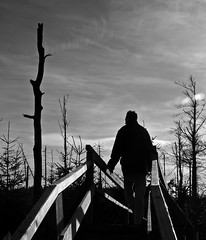
THE angels are stooping
Above your bed;
They weary of trooping
With the whimpering dead.
God's laughing in Heaven
To see you so good;
The Sailing Seven
Are gay with His mood.
I sigh that kiss you,
For I must own
That I shall miss you
When you have grown.
William Butler Yeats
